
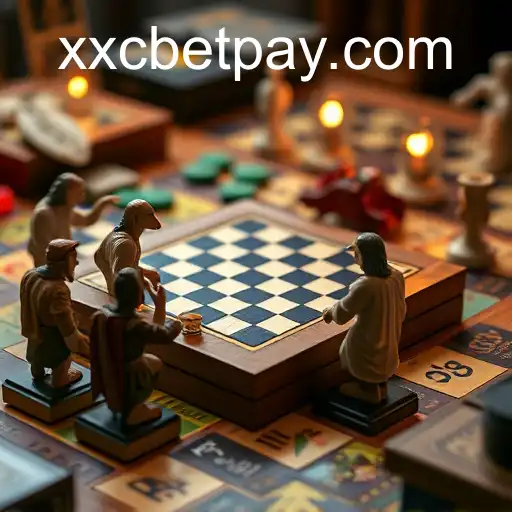
xxcbet | Unleashing the Magic of Tabletop Games: A Journey Beyond the Board
xxcbet’s Discover the intricate world of tabletop games, their history, cultural impact, and the excitement they bring beyond the board. Explore strategies, communities, and the evolution that defines the magic of tabletop gaming, intertwined with the allure of 'xxcbet'.
The Rich History of Tabletop Games
Tabletop games have been an integral part of human history, transcending generations and cultures as a cherished form of entertainment. From ancient civilizations to modern-day gatherings, these games have served as a medium for strategy, creativity, and social connection. Understanding this rich history provides valuable insights into their enduring appeal.
The origins of tabletop games can be traced back thousands of years. Ancient Egypt played host to Senet, a game of strategy that captivated players along the Nile. Similarly, the ancient Chinese were engrossed in Go, a complex game of territorial control that required profound strategic thinking. Over time, these games evolved, weaving themselves into the cultural fabric of societies across the globe.
The Resurgence of Tabletop Games in the Modern Era
In recent decades, tabletop games have experienced a remarkable resurgence in popularity. This revival reflects a broader cultural shift toward nostalgia and social interaction in an increasingly digital world. With the rise of video games and virtual reality, many are turning to tabletop games as a tactile escape into imaginative realms.
The concept of 'xxcbet' has emerged in this gaming renaissance, emphasizing the thrill of the unpredictable. It intertwines the elements of chance, strategy, and suspense, captivating players with its dynamic gameplay. As a keyword associated with excitement and risk, 'xxcbet' has become synonymous with the thrilling experiences that tabletop games offer to avid enthusiasts.
Exploring Popular Tabletop Game Genres
The world of tabletop gaming is vast and diverse, offering genres to suit ever player’s interests. Popular genres such as strategy games, role-playing games (RPGs), and cooperative games have captivated audiences with their unique mechanics and narratives.
Strategy games like Chess and Settlers of Catan challenge players to think critically and plan ahead. These games cultivate skills in resource management, negotiation, and tactical decision-making. Players immerse themselves in scenarios that demand foresight and adaptability, often engaging in intense battles of wits.
Role-playing games take tabletop gaming to another level by allowing players to embody characters and embark on epic adventures. Dungeons & Dragons, a pioneering RPG, transports players to fantastical worlds where they collaborate to overcome challenges and shape captivating narratives. The allure of RPGs lies in their ability to foster creativity, teamwork, and immersive storytelling.
Cooperative games have garnered acclaim for their emphasis on collaboration rather than competition. In titles like Pandemic and Arkham Horror, players work together to achieve shared objectives, promoting camaraderie and strategic synergy. These games exemplify the power of teamwork, encouraging players to strategize collectively to overcome obstacles.
The Cultural Impact of Tabletop Games
Tabletop games have not only entertained individuals but have also made significant cultural contributions. They serve as a conduit for social interaction, fostering connections between players in a world that often prioritizes individualism. Families, friends, and strangers gather around tables to engage in immersive gameplay, building memories and strengthening relationships.
More than just casual entertainment, tabletop games have become a platform for learning and development. Educators increasingly utilize these games to teach critical thinking, communication, and mathematical skills. Furthermore, they encourage empathy and cooperation, as players must understand diverse perspectives and collaborate effectively to succeed.
The Communities that Thrive around Tabletop Games
The allure of tabletop games extends beyond the games themselves, as vibrant communities have emerged around these shared experiences. From local game shops to online forums, enthusiasts connect to discuss strategies, share stories, and organize events. Gaming conventions like Gen Con and Essen Spiel draw thousands, showcasing the diversity and creativity within the tabletop industry.
More than just consumers, many players are creators, contributing to the expansion of the tabletop universe. The rise of crowdfunded platforms has empowered independent designers to bring their innovative ideas to life. As a result, the market is replete with new games, offering fresh mechanics and narratives that continue to push the boundaries of traditional gameplay.
